




Key Takeaways
- Scent discrimination is a detection dog's learned ability to give its trained response to target odor and withhold that response to every other odor in the search area, including odors that share chemistry with the target.
- Dogs trained only on pure ammonium nitrate detected fertilizer-grade ammonium nitrate on 66.7% of trials, which shows how pure-component training creates misses on real mixtures (reviewed by Moser, Bizo and Brown, Animals, 2019).
- In a 2018 Heliyon study by Nathaniel Hall and Clive Wynne, dogs trained on oxidizer mixtures detected the oxidizer inside novel mixtures, while dogs trained on the pure oxidizer saw their hit rate drop sharply.
- SWGDOG guidelines list a variety of distractions and blank searches as parts of maintenance training, and require a blank search in every comprehensive assessment.
- Handler expectation can produce alerts that look like a discrimination failure: 18 certified detection teams called 225 false alerts in searches with no target odor present (Lit, Schweitzer and Oberbauer, Animal Cognition, 2011).
Scent discrimination is what separates a reliable detection dog from a dog that alerts on anything that smells close enough. The dog's nose is rarely the limit. The research points at training instead: which odors the dog learned to treat as target, which ones it learned to ignore, and whether anyone tested the difference with a blank search and a handler who didn't know the answer.
This post covers what olfactory science says about how dogs separate target from distractor, where false alerts actually come from, and how to train and measure discrimination on your own team.
What is scent discrimination in detection dogs?
Scent discrimination is a detection dog's learned ability to give its trained response to target odor and withhold that response to every non-target odor in the search area. In learning science terms, discrimination means treating different stimuli as having different outcomes, the definition Moser, Bizo and Brown use in their 2019 review of olfactory generalization in detector dogs, published in Animals.
Discrimination isn't a fixed property of the nose. It's a behavior, built one reinforced odor and one unreinforced odor at a time. Two dogs with equally good noses can discriminate very differently because they learned on different odor sets.
How does a dog's nose physically separate odors?
The canine nose separates odor from breathing before discrimination even starts. Airflow modeling by Craven, Paterson and Settles, published in the Journal of the Royal Society Interface in 2010, showed that inhaled air splits into distinct respiratory and olfactory flow paths, with odor-bearing air routed through the dorsal meatus to an olfactory recess at the back of the nasal cavity.
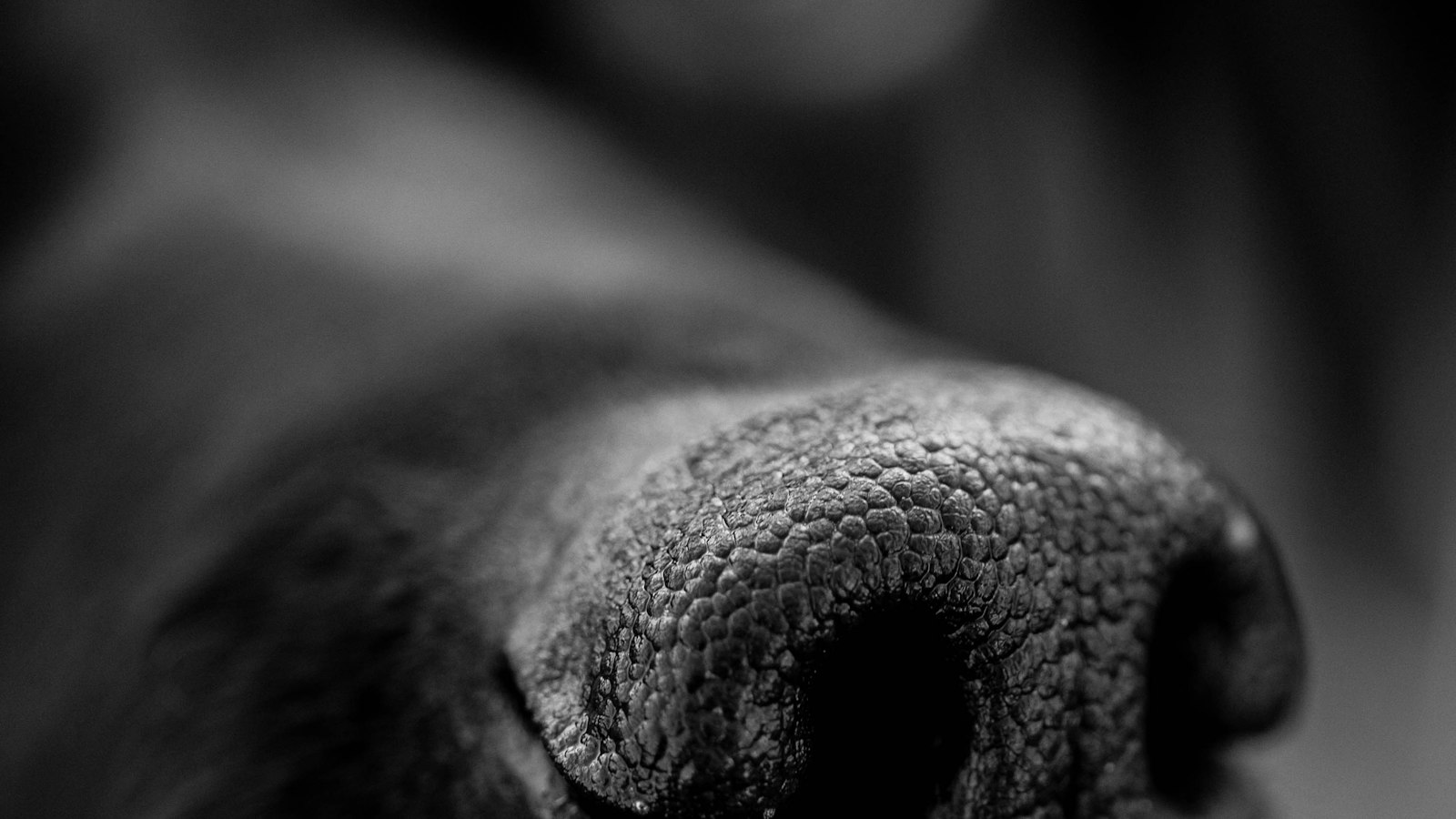
The receptor toolkit behind that airflow is large. A 2005 analysis of the dog genome by Pascale Quignon and colleagues in Genome Biology identified 1,094 olfactory receptor genes, about 20% of them pseudogenes. Each receptor responds to a range of molecules and each molecule activates a range of receptors, so the brain reads an odor as a pattern across many receptors rather than as one signal.
Sensitivity also varies from dog to dog. Concha and colleagues measured detection thresholds in 10 dogs given identical training and found thresholds ranging from 40 parts per billion down to 1.5 parts per trillion (Frontiers in Veterinary Science, 2019). Sensitivity tells you whether a dog can smell something. Discrimination tells you whether the dog knows what to do about it.
What is the difference between discrimination and generalization?
Generalization is a dog's tendency to respond to odors that resemble the trained target, and discrimination is its ability to respond differently to odors that differ. Moser and colleagues describe generalization as the process that lets an animal group perceptually similar stimuli into one category. Every detection program needs both.
A narcotics dog has to generalize from a training aid to street samples that vary in purity, cutting agents and packaging. That same dog has to discriminate those samples from coffee, tobacco, dryer sheets and the dog food in the trunk. Train too narrowly and the dog misses real targets. Train too broadly and it alerts on near misses.
The review frames this trade off as a generalization gradient. Response is strongest to the trained odor and falls away as odors become less similar, and training controls how steep that curve is. According to Moser, Bizo and Brown, more training trials on fewer exemplars narrow the gradient and sharpen discrimination, while multiple target exemplars widen what the dog accepts as target.
Why do detection dogs miss targets hidden inside mixtures?
Dogs trained on a single pure compound often treat a mixture that contains that compound as a different odor. Field targets are almost always mixtures, so pure-component training produces misses where they matter most. The Moser review summarizes several findings:
- Dogs trained only on ammonium nitrate detected fertilizer-grade ammonium nitrate on 66.7% of trials, ammonium nitrate mixed with soil on 73.3%, and ammonium nitrate mixed with aluminum on 68.9% (Lazarowski and colleagues, 2015, 15 dogs).
- In work by Lucia Lazarowski and David Dorman with military working dogs, only 6 of 16 dogs reached a 75% correct standard on potassium chlorate mixtures containing fuels and accelerants. Dogs trained with more components in the training submixture generalized more readily to the full mixture.
- Carola Fischer-Tenhagen and colleagues found that dogs trained on 10 herb mixtures generalized better than dogs trained on chamomile alone.
The mechanism is perceptual. A dog can process a mixture configurally, as one new odor, or elementally, picking out the components inside it. Training history largely decides which one it does.
What the Hall and Wynne mixture study found
Training on mixtures teaches a dog to find the target component inside a background odor. Nathaniel Hall and Clive Wynne tested this in a 2018 crossover study published in Heliyon. Dogs trained on oxidizer mixtures detected the oxidizer above chance and generalized to novel mixtures with no drop in performance. Dogs trained on the pure oxidizer lost much of their hit rate when the oxidizer appeared inside a mixture, and recovered only after mixture training.
Hall put the lesson plainly in a Texas Tech news release: “if you don't force them to try to make the separation of elements, they won't.” The study used four dogs, and mixture training took longer to learn. The direction of the result is still clear enough to build a training plan around.
What dogs actually respond to in a target odor
The odorant a dog responds to isn't always the most abundant chemical coming off the target. In their 2020 methods review, Lazarowski and colleagues cite Kenneth Furton's cocaine research showing that methyl benzoate is the active odorant dogs respond to, even though it isn't the dominant volatile in the headspace. Moser and colleagues add a caution in the other direction: training on a single component such as methyl benzoate doesn't guarantee a dog will recognize the full target. Pseudo scent training aids need validation against real material for that reason.
What counts as a distractor odor?
A distractor is any non-target stimulus placed in a search area or naturally present in it. SWGDOG's SC1 terminology document defines distractors as non-target stimuli placed within a search area and lists toys, food and animal odor as examples. The later ANSI/ASB Standard 092 (2021) extends the definition to distractors that are either placed or naturally occurring.
For training design, distractors fall into four working categories:
- Environmental odors: food, animal odor, human scent, fuel and the normal background of the search site.
- Packaging and handling odors: plastic bags, tape, gloves, containers and the storage materials that travel with every training aid.
- Near-target odors: cutting agents, precursors and chemically related compounds that share volatiles with the target.
- Reward odors: toys and food, which a dog can learn to hunt in place of target.
Packaging deserves the most attention because it rides along with every hide. Moser and colleagues note reports of explosives dogs responding to PVC and recommend explicit discrimination training against odors shared across hides, such as packaging, substrates and cutting agents. If every hide comes out of the same bag, the bag is part of the odor picture the dog learned.
Intensity matters too. Lazarowski and colleagues recommend in Frontiers in Veterinary Science that distractors match the target in intensity, so a dog can't solve the problem by heading for the strongest smell in the room.
Can handler cues look like a discrimination failure?
Yes. A false alert isn't always a nose problem. Lisa Lit, Julie Schweitzer and Anita Oberbauer at UC Davis ran 18 certified drug and explosive detection teams through searches that held no target odor at all. The teams called 225 false alerts across 144 runs, and alerts clustered at locations handlers had been told were marked, while decoy sausages and a tennis ball did not pull alerts the same way (Animal Cognition, 2011).
Before retraining a dog's discrimination, rule out the handler. Lazarowski and colleagues describe double blind testing as the gold standard. A 2017 review of 54 scent detection studies by Johnen, Heuwieser and Fischer-Tenhagen found test methods so inconsistent that results were open to bias, and proposed a reporting standard covering the target odor, setup, samples, test design, trainer and breed. We covered the human side of this in more depth in our post on the handler-dog bond.
How do you train scent discrimination?
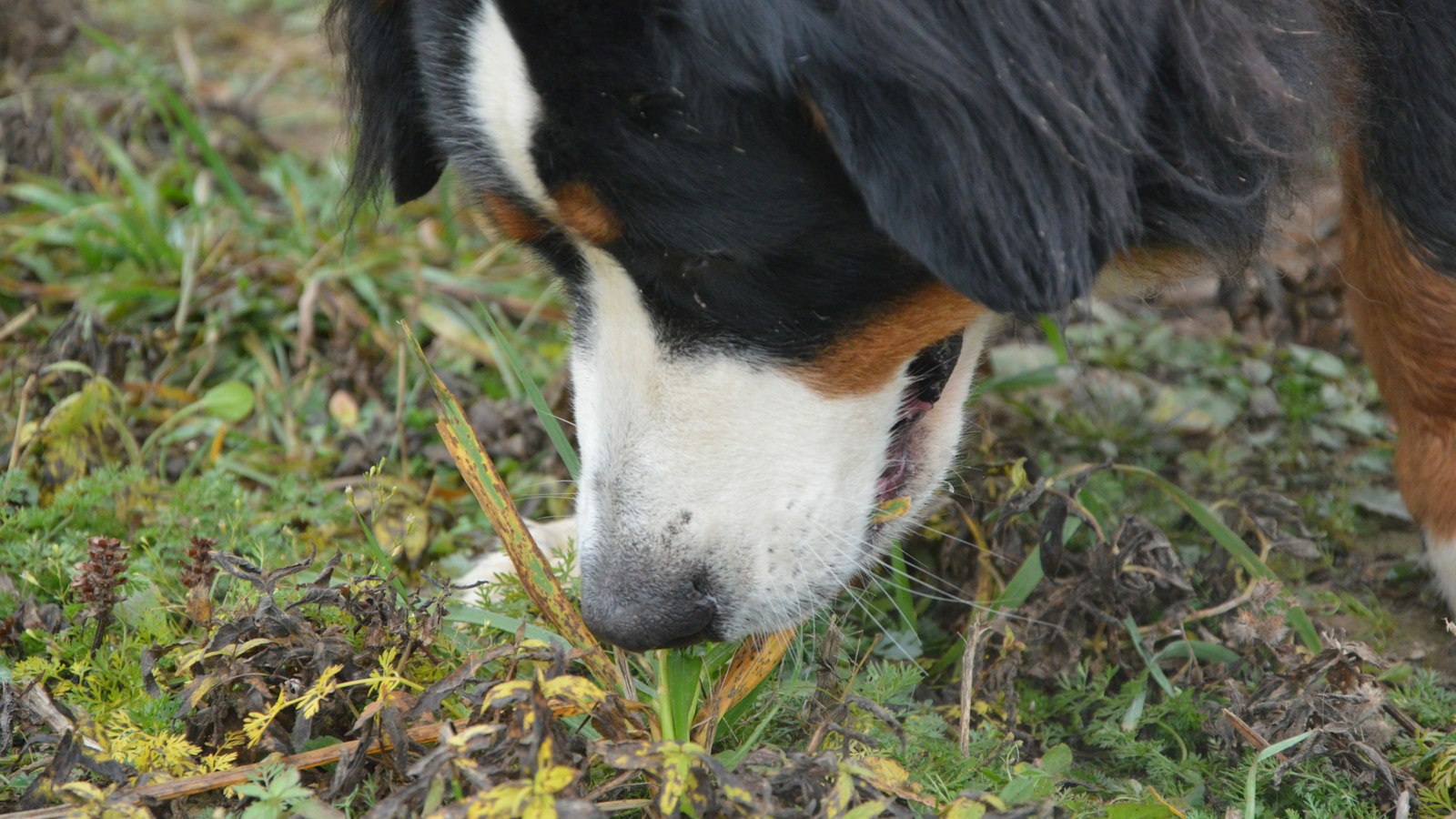
Train discrimination on purpose: vary targets, introduce distractors deliberately, run blanks, and test blind. The sequence below follows the research covered above:
- Build recognition on real target material from more than one source, so the dog learns the target and not one specific sample.
- Introduce packaging blanks early. Put clean bags, gloves and containers in the search area with no target inside.
- Add near-target distractors once recognition is solid, matched to the target in intensity.
- Move to mixtures. For explosives and other compound targets, train the target inside realistic backgrounds, as Hall and Wynne did.
- Run blank searches regularly. SWGDOG's general guidelines list a variety of blank searches and a variety of distractions as parts of maintenance training, and require a blank search in comprehensive assessments.
- Keep target probability unpredictable. Lazarowski and colleagues recommend that the odds of a target on any search stay unpredictable to dog and handler alike, with blank trials mixed in so the dog can't learn that a later position must hold the hide.
- Test blind. SWGDOG requires certification to include an odor recognition or double blind assessment, and bars the use of training day aids and targets.
What should you log to measure scent discrimination?
Log every response, including the ones you didn't want: correct alerts, misses, false alerts, and exactly where each false alert landed. A hit rate alone hides discrimination problems. A dog that finds every hide and also alerts on every clean bag has a perfect hit rate and a serious discrimination problem.
The minimum record for each session covers target odor and source, hide placement and age, distractors present and their category, whether the search was blank, who knew the hide location, the response at each location, and conditions. With that record, patterns show up: false alerts that always land on the same packaging, misses that only happen on mixtures, or a dog whose accuracy holds with its own handler and drops in blind tests.
In DogBase, Training & Activity Logging captures sessions, hides, distractors and outcomes in seconds, and the Custom Type Builder lets a unit define its own odor types, distractor categories and blind test fields. Performance Analytics & Insights shows trends across sessions, dogs and handlers, so a supervisor can see a false alert rate climbing on one distractor category long before it costs the team a certification. When a court or certifying body asks how the dog was trained and tested, Reports, Compliance & Exports turns that history into a document instead of a recollection.
What are the limits of the research?
Most canine olfaction studies use small samples, often between four and sixteen dogs, and much of the mixture work uses explosive precursors under laboratory conditions rather than live operational searches. Methods also vary widely between labs, which was the central finding of the Johnen review. Treat these results as strong guidance for training design, and use your own logged data to confirm what holds for your dogs.
Frequently Asked Questions
What is a distractor odor in detection dog training?
A distractor odor is any non-target odor present in a search area, either placed deliberately or occurring naturally. SWGDOG lists toys, food and animal odor as examples. In practice, packaging, cutting agents and handling odors cause the most false alerts because they travel with training aids.
What are common distractors in drug detection dog training?
The most common are food, animal odor, toys, human scent, plastic bags, tape, gloves, containers and cutting agents. Packaging is the one handlers most often overlook. Train against clean packaging blanks and vary the containers you hide target in.
Why does my detection dog alert on empty packaging?
The dog most likely learned the packaging as part of the target picture because hides kept arriving in the same material. Put clean packaging in the search area as blanks and rotate containers. Run a blind test as well, since handler cues can produce the same pattern.
Should detection dogs train on pure odors or mixtures?
Both, in sequence. Pure target builds initial recognition, but dogs trained only on pure components often miss the same component inside a mixture. In a 2018 study by Hall and Wynne, mixture-trained dogs kept detecting the oxidizer in novel mixtures while pure-trained dogs lost much of their hit rate.
How do you test a detection dog's scent discrimination?
Use blind or double blind searches that include blank runs, distractors matched to the target in intensity, and target placement nobody on scene can predict. SWGDOG requires certification to include an odor recognition or double blind assessment, and comprehensive assessments must include a blank search.
Sources
- Moser, Bizo and Brown, Olfactory Generalization in Detector Dogs, Animals 9 (2019)
- Hall and Wynne, Odor mixture training enhances dogs' olfactory detection of Home-Made Explosive precursors, Heliyon 4 (2018)
- Texas Tech University, news release on Hall's explosive mixtures training research (2019)
- Lazarowski et al., Methodological considerations in canine olfactory detection research, Frontiers in Veterinary Science 7 (2020)
- Concha et al., Canine olfactory thresholds to amyl acetate in a biomedical detection scenario, Frontiers in Veterinary Science 5 (2019)
- Craven, Paterson and Settles, The fluid dynamics of canine olfaction, Journal of the Royal Society Interface 7 (2010)
- Quignon et al., The dog and rat olfactory receptor repertoires, Genome Biology 6 (2005)
- Lit, Schweitzer and Oberbauer, Handler beliefs affect scent detection dog outcomes, Animal Cognition 14 (2011)
- Johnen, Heuwieser and Fischer-Tenhagen, An approach to identify bias in scent detection dog testing, Applied Animal Behaviour Science (2017)
- SWGDOG SC1, Terminology (2011)
- SWGDOG SC2, General Guidelines (2009)
- NIST OSAC glossary, Distractor (ANSI/ASB Standard 092, 2021)
Almog Koren is the founder and CEO of DogBase, an active SAR K9 handler with his Belgian Malinois Echo, and a former IDF Special Forces operator who has trained and deployed with civilian SAR organizations in Israel and Europe.