




.webp)
.webp)

.webp)


Byline: By Almog Koren, Founder of DogBase and active SAR K9 handler. DogBase supports working dog documentation across search and rescue, detection, and service dog disciplines.
Key Takeaways
- Diabetic alert dogs detect isoprene and other volatile organic compounds that rise in a person's breath and sweat during blood sugar swings, odors far below what a human nose can register.
- A 2013 University of Bristol study led by Dr. Nicola Rooney found that 17 diabetic patients working with alert dogs had fewer paramedic calls, fewer unconscious hypoglycemic episodes, and reported greater independence.
- Owner-independent research by Wilson and colleagues recorded trained dogs changing behavior up to 15 minutes before a continuous glucose monitor registered an out-of-range reading.
- A controlled 2013 study published in Diabetes Care found trained dogs identified hypoglycemic skin swabs at close to chance level, with sensitivity and specificity both near 50 percent, a sharp contrast to more favorable field studies.
- Assistance Dogs International accredits nonprofit training organizations, not individual dogs, and no single government or industry body certifies diabetic alert dog competence the way SWGDOG-aligned protocols govern narcotics or explosives detection.
A diabetic alert dog is a task trained service dog that detects the scent signature of abnormal blood glucose and signals its handler before the swing becomes dangerous. That's the pitch, and it's a real capability, not a myth. But the research behind it is more complicated than most marketing pages let on, and any program training or placing these dogs needs to understand both sides before making claims to a client or a court.
The first dog documented as trained specifically to detect hypoglycemia was a California dog named Armstrong in 2003, later part of the team recognized in the Guinness Book of World Records as the first scientifically trained diabetic alert pairing. Dogs4Diabetics, founded in 2004, became the first Assistance Dogs International accredited organization built specifically around insulin dependent diabetics. Under the Americans with Disabilities Act, a fully task trained diabetic alert dog qualifies as a service dog, with public access rights that follow from the trained task, not from a certificate or a vest.
What a Dog Is Actually Smelling
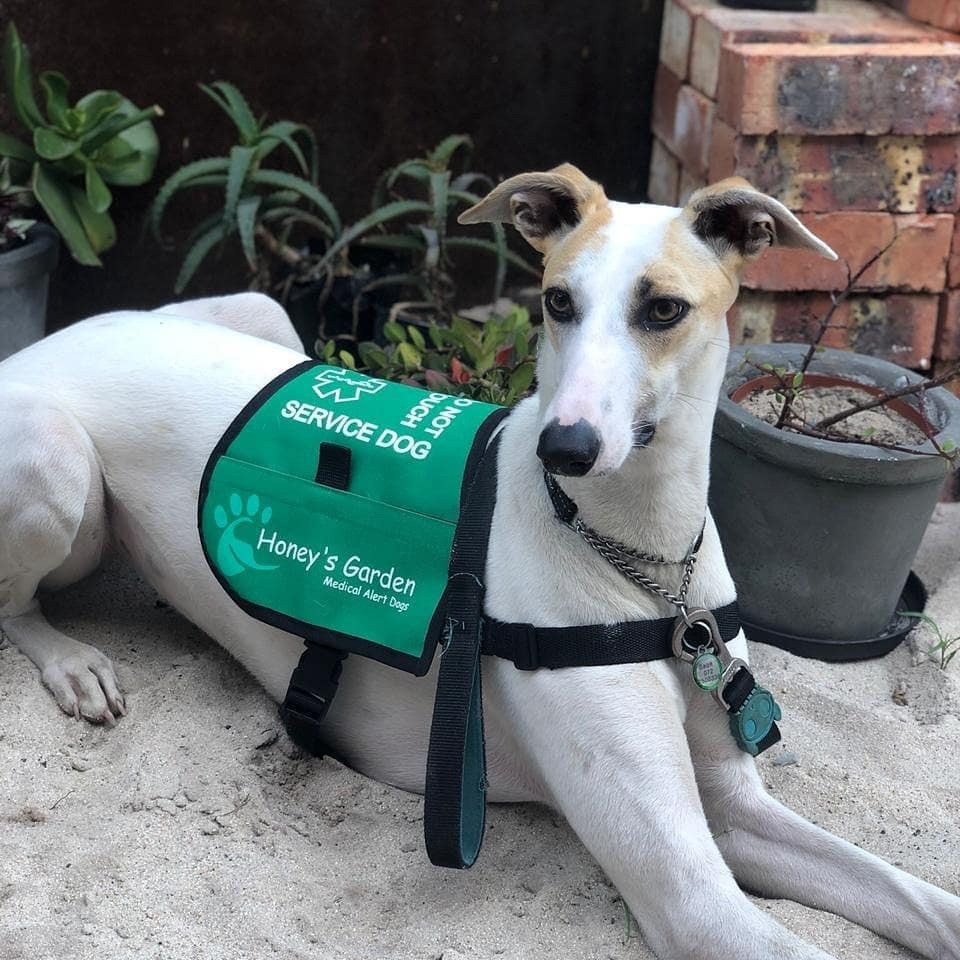
Dogs are responding to volatile organic compounds released through breath and sweat as blood sugar moves outside a safe range, compounds present at concentrations far below human olfactory detection. Researchers at the University of Cambridge identified isoprene as one of the key markers tied to falling glucose levels. Claire Pesterfield, a paediatric diabetes specialist nurse with type 1 diabetes who worked with the UK charity Medical Detection Dogs, described the compound as one humans simply cannot perceive, while a trained dog finds it easy to identify.
This is the core mechanism that makes the whole discipline plausible. It's also the reason trainers describe diabetic alert work as a discrimination task, closer in structure to narcotics or explosives detection than to obedience work. The dog isn't reacting to a person's mood or behavior on a good day. It's trained to key on a specific, repeatable chemical signal.
How Trainers Imprint the Alert
Training starts with scent samples collected directly from the handler during a confirmed high or low glucose event, usually saliva or sweat captured on gauze or cotton swabs and stored for repeated presentation. The dog is imprinted on that sample the same way a narcotics dog is imprinted on a target odor, then generalized across many samples from the same handler so it isn't keying on something incidental to one collection.
The alert behavior itself has to be a specific, trained, and verifiable action. The International Association of Assistance Dog Partners is explicit on this point in its public access training standards: a natural behavior like licking doesn't count as a trained task, no matter how consistently a dog happens to do it before a low. Programs train a distinct, unnatural cue instead: a nudge, a paw, a bell push, or in some programs a retrieve of the glucose meter itself. That distinction matters legally as well as operationally, since a trained, verifiable task is what gives a service dog its access rights under the ADA, not the presence of the dog alone.
How Reliable Are Diabetic Alert Dogs? The Research Is Genuinely Mixed
The honest answer is that accuracy varies by study design, and a program that only cites the favorable numbers is leaving out half the picture.
The case for accuracy. Dr. Nicola Rooney's 2013 University of Bristol study followed 17 diabetic patients paired with alert dogs and found fewer emergency calls to paramedics, fewer episodes of unconsciousness from hypoglycemia, and improved independence for the handlers. A later owner-independent study by Wilson and colleagues, using objective behavior analysis rather than owner self-report, recorded dogs changing behavior up to 15 minutes before a continuous glucose monitor registered an out-of-range reading. That lead time is operationally significant. It's the difference between a handler treating a low before symptoms hit and a handler discovering the problem after cognitive function has already started to slip.
The case for caution. A controlled study published in Diabetes Care in 2013, run out of Legacy Research Institute in Portland with researchers from Oregon Health and Science University, tested trained dogs against blinded hypoglycemic and normal skin swabs. The dogs performed at close to chance level, with sensitivity and specificity both near 50 percent. The researchers noted that owners and trainers believed the same dogs were reliable at home, which points to a real gap between controlled testing and field performance, not necessarily a flaw in either result. Evan Los, a pediatric endocrinologist at OHSU who has studied diabetic alert dogs, told NPR that despite a sharp rise in popularity, their real-world effectiveness remained largely unknown, and that it isn't always clear whether a dog is detecting a chemical signal or simply reacting to a handler's visible symptoms, like sweating or shaking.
Both sets of findings can be true at once. A dog can reliably alert a specific handler it has trained with for years, in the handler's own home and routine, while performing poorly against a blinded panel of unfamiliar samples from strangers. That gap is exactly why generic accuracy claims don't hold up to scrutiny, and why program level data, not vendor claims, is what a serious buyer or referring clinician should ask for.
The variable most studies point to isn't the dog's nose. It's the testing condition. Home based studies capture a dog working with a familiar handler, on a familiar sample, in a familiar environment, which is closer to how the dog actually works day to day. Blinded lab studies strip out every cue except the isolated chemical sample, which is a harder and more artificial task. A program that only trains and tests in the home environment may be building a dog that performs beautifully for its own handler and never gets evaluated against the kind of conditions a skeptical clinician or an ADI assessor would use to judge competence. That's a training design question as much as a research question, and it's one program managers should be asking their own trainers directly.
Certification and Accreditation: What Actually Exists
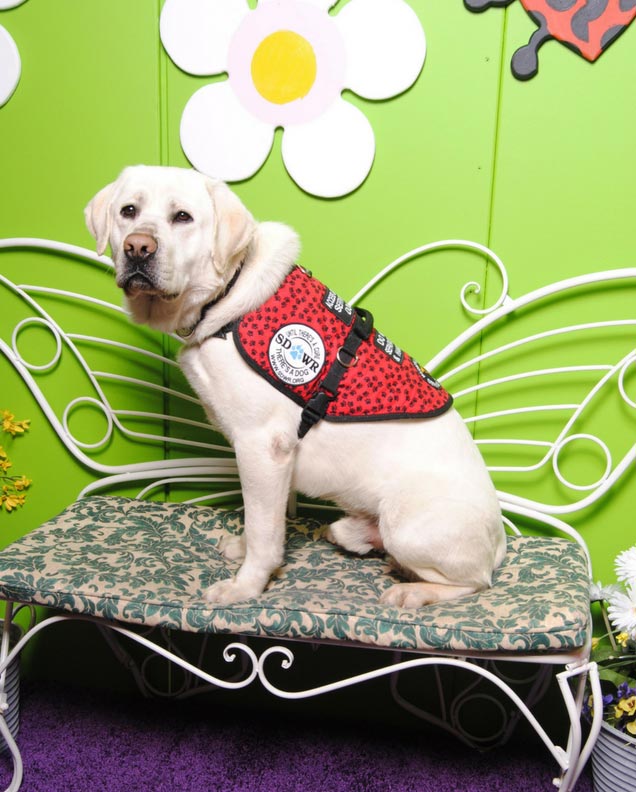
There is no single government body or universal competence test that certifies an individual diabetic alert dog, and any program claiming otherwise should be questioned. Assistance Dogs International, the standards body that has governed the assistance dog industry since 1987, accredits nonprofit training organizations against its Standards and Accreditation Manual. It does not certify individual dogs directly. Accreditation confirms that an organization's training, placement, and follow up practices meet ADI's requirements, which is a meaningful signal, but it's an organizational credential, not a per dog guarantee.
The International Association of Assistance Dog Partners publishes its own minimum training standards for public access, built around the same principle: a dog must be able to pass a Public Access Certification Test, and the trained task must be specific and verifiable, not incidental. Compare that to detection disciplines like narcotics or explosives work, where SWGDOG aligned proficiency standards give evaluators a shared framework for testing detection accuracy under controlled conditions. Diabetic alert work doesn't have an equivalent industry wide protocol yet, which is part of why the research findings above vary so widely from program to program and study to study.
Why Documentation Matters as Much as the Nose
Given that gap between field anecdote and controlled testing, the strongest thing a training organization can offer a client, a referring physician, or an ADI assessor isn't a marketing claim. It's a record.
Every imprinting session, every sample source, and every alert outcome, whether it's a true positive, a false alert, or a miss against a confirmed glucose reading, is a data point that either supports or undermines a dog's reliability claim over time. A program that logs this consistently can show a client and a physician exactly how a specific dog performs against that specific handler's chemistry, rather than pointing to a study about different dogs and different handlers. That's the difference between an anecdote and evidence.
This is where DogBase's Training & Activity Logging module fits directly into diabetic alert dog programs: recording each scent session, sample type, and alert response in seconds rather than a paper log that gets summarized from memory weeks later. The Custom Type Builder lets a program define its own alert accuracy categories, matching however it structures true positive, false alert, and missed alert data internally. Performance Analytics & Insights then turns that logged history into a trend a trainer can actually see: whether a dog's accuracy is improving, plateauing, or slipping as it ages or as a handler's diabetes management changes. For ADI accredited organizations and candidates working through reaccreditation, Reports, Compliance & Exports produces the documentation an assessor or a referring clinician can review without a trainer rebuilding a spreadsheet from scratch.
Picture a program evaluating whether a two year old alert dog is ready to advance from supervised to independent placement. Without a logged history, that decision rests on a trainer's memory and a handler's general impression that things have been going well. With a logged history, the same decision can be checked against actual numbers: how many confirmed low glucose events occurred in the last ninety days, how many the dog alerted to, and how many it missed. That's the kind of record an insurer, a physician, or an ADI assessor can actually evaluate, and it's also the kind of record that protects a program if a placement is ever questioned later.
Can a Diabetic Alert Dog Replace a Continuous Glucose Monitor
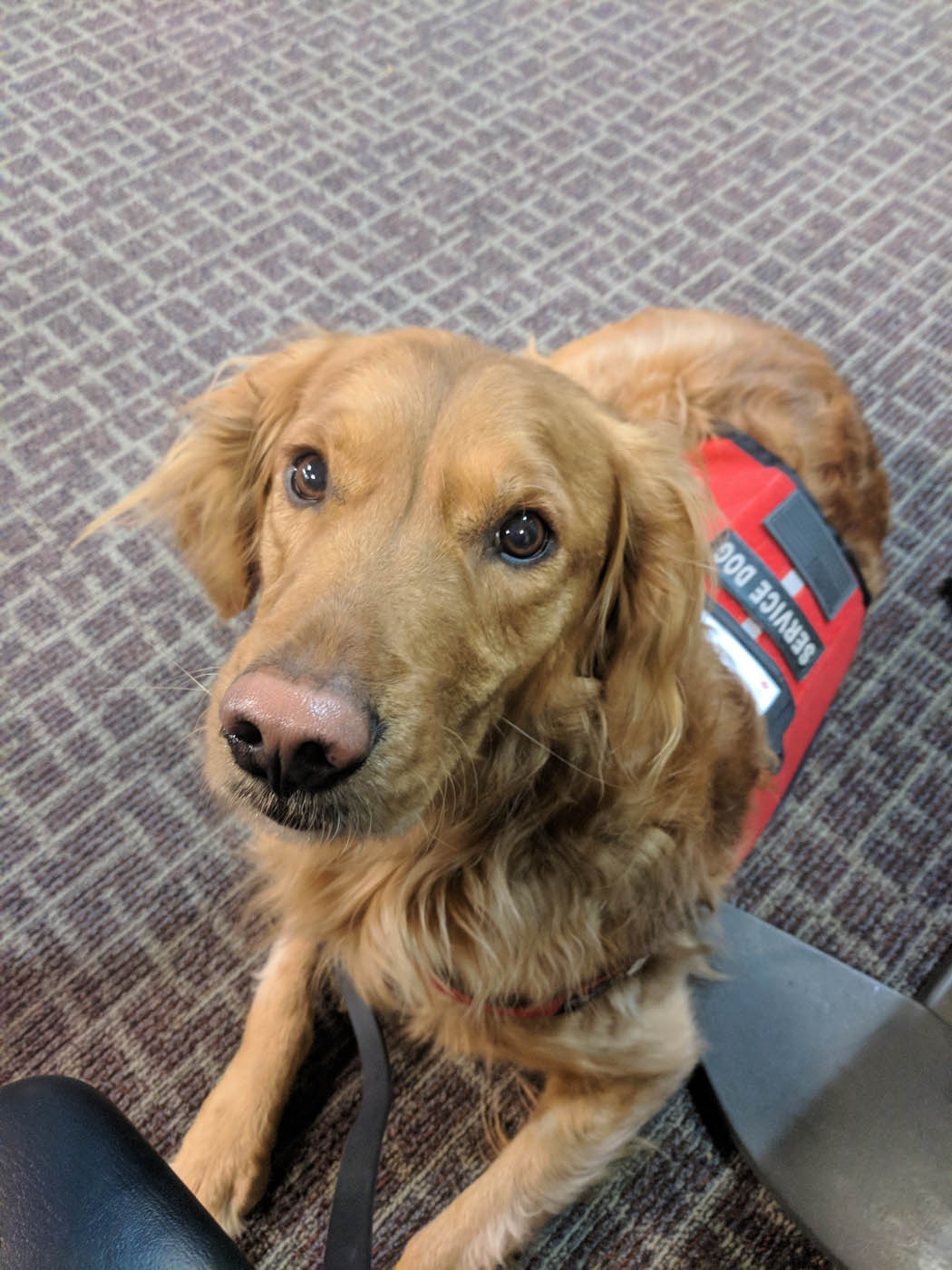
No. A diabetic alert dog is a complementary layer of awareness, not a substitute for medical monitoring technology. Continuous glucose monitors provide a continuous numeric reading with alarms tied to specific thresholds, while a dog provides an additional, sometimes earlier, behavioral cue that can prompt a handler to check a device they might otherwise ignore. Programs and clinicians who present alert dogs as a monitoring device in themselves are overstating what the current evidence supports, and responsible placement organizations are explicit with clients that the dog works alongside a CGM or fingerstick routine, not instead of one.
This pillar sits primarily in DogBase's detection and scent work content, since diabetic alert work is fundamentally a discrimination task built on the same scent science that underlies narcotics, explosives, and conservation detection. It crosses into service dog program territory as well, particularly around placement readiness and the documentation trail a program needs from first evaluation through a client's daily use. Both angles matter to the handlers and program managers who read this kind of piece.
FAQ
How accurate are diabetic alert dogs?Accuracy varies significantly by study and by testing method. Field research, including a 2013 University of Bristol study and later owner-independent work by Wilson and colleagues, found meaningful reductions in emergency episodes and alerts up to 15 minutes ahead of a continuous glucose monitor. A controlled 2013 study in Diabetes Care found dogs performed at close to chance level against blinded skin swabs, so program specific, logged performance data matters more than any single published number.
What are diabetic alert dogs actually smelling?They're detecting volatile organic compounds, including isoprene, that rise in breath and sweat when blood glucose moves outside a normal range. University of Cambridge researchers identified isoprene as a key marker tied to falling glucose levels. These compounds sit well below the threshold of human smell, which is exactly why a trained dog offers something a person can't sense on their own.
How are diabetic alert dogs trained?Training starts with scent samples collected from the handler during a confirmed high or low glucose event, then imprinted and generalized across many samples so the dog keys on the chemical signal rather than something incidental. Trainers then shape a specific, verifiable alert behavior, such as a nudge, a paw, or retrieving a glucose meter. Standards from the International Association of Assistance Dog Partners specifically exclude natural behaviors like licking as valid trained tasks.
Do diabetic alert dogs need to be certified?There's no single mandatory certification for individual diabetic alert dogs. Assistance Dogs International accredits training organizations against its published standards, and groups like the International Association of Assistance Dog Partners set minimum public access training standards, but no government body tests and certifies each dog the way some detection disciplines are tested against shared proficiency protocols.
Can a diabetic alert dog replace a continuous glucose monitor?No. A diabetic alert dog adds a behavioral layer of awareness alongside medical monitoring, not a replacement for it. Responsible training programs present the dog as complementary to a CGM or fingerstick routine, since the published research doesn't support relying on a dog as a standalone monitoring method.
How much does a diabetic alert dog cost?Fully trained diabetic alert dogs commonly cost around 20,000 dollars, according to reporting by NPR, and that cost typically isn't covered by insurance, though some nonprofit organizations offer financial assistance. The price reflects the length and specificity of the training process, from scent imprinting through public access work.